Daciana Farcas

How Product Photography Can Reduce Buying Friction in E-Commerce

Online, customers cannot pick up a product, feel its texture, turn it around in their hands or ask someone a quick question before buying. Every unanswered question creates a small moment of hesitation.

  1. What does the finish actually look like?
  2. How large is the product?
  3. What does it look like in use?
  4. What exactly is included?
  5. Will it feel as premium in real life as it does on the website?

This is where product photography becomes more than a visual asset. Done strategically, it can remove uncertainty before the customer ever reaches the Add to Cart button.

Good Product Photography Answers Questions Before They Are Asked

A strong e-commerce image should do more than make a product look attractive.

It should provide information.

On a product page, photography often becomes the customer’s substitute for physically examining the product. They use images to judge size, materials, finish, functionality and whether what they are seeing feels credible enough to buy. When those visual answers are missing, uncertainty remains.

Baymard’s product-page usability research has found that 56% of users begin by exploring product images, while 42% try to understand a product’s size from those images.

That means every image should ideally have a purpose.

A clean front-facing image might establish the product clearly.

A macro photograph can show texture, material or craftsmanship.

A lifestyle image can communicate scale and context.

An in-use photograph can explain how the product fits naturally into someone’s routine.

Together, those images remove small uncertainties that otherwise remain between interest and purchase.

Show Scale, Not Just the Product

Scale is one of the easiest things to understand in a physical shop and one of the hardest things to judge online.

A beautifully photographed bottle against a seamless background might look premium, but the customer may still have no idea whether it fits in the palm of a hand or fills half a bathroom shelf.

The same problem appears with jewelry, technology, accessories and wellness products.

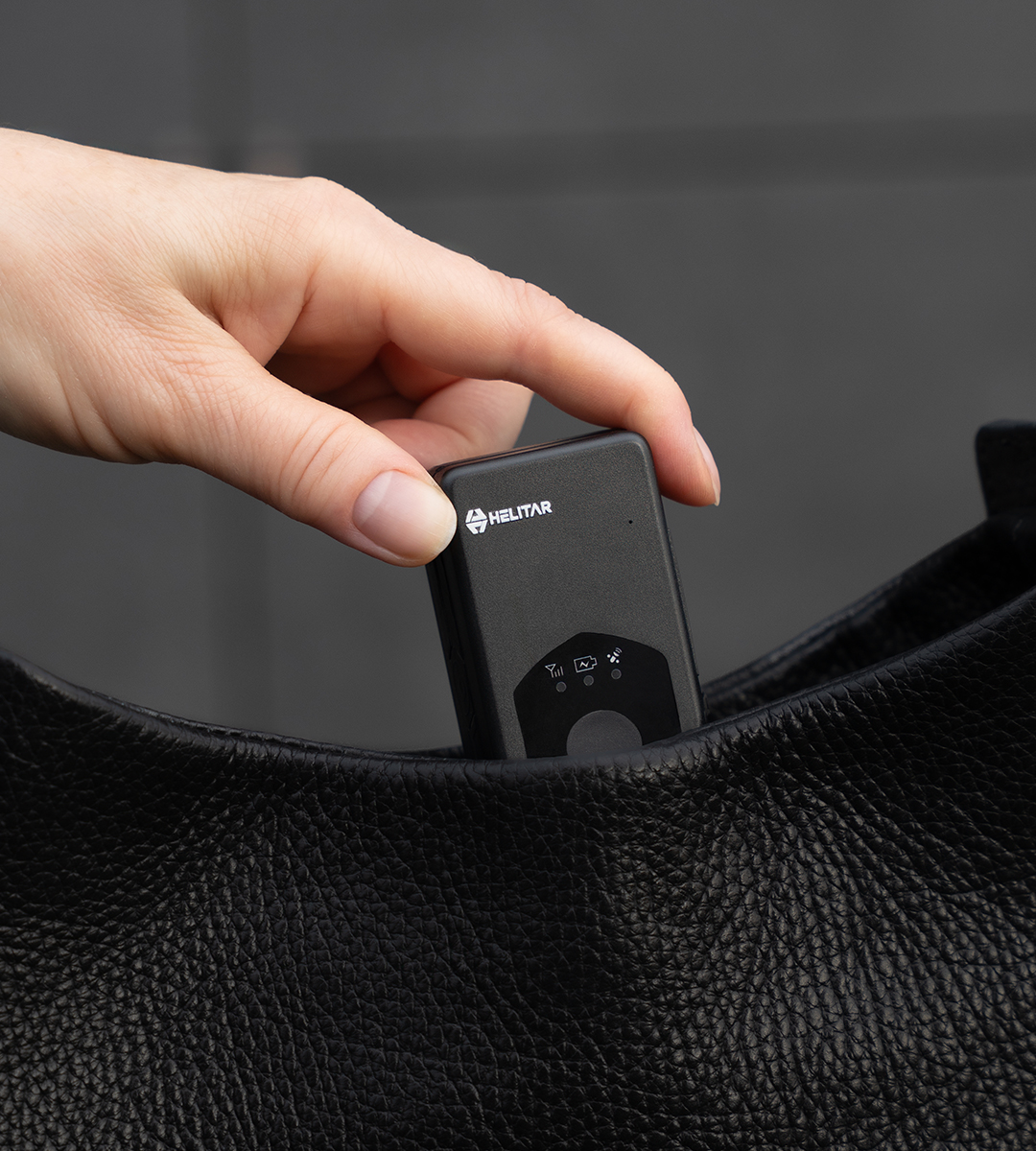
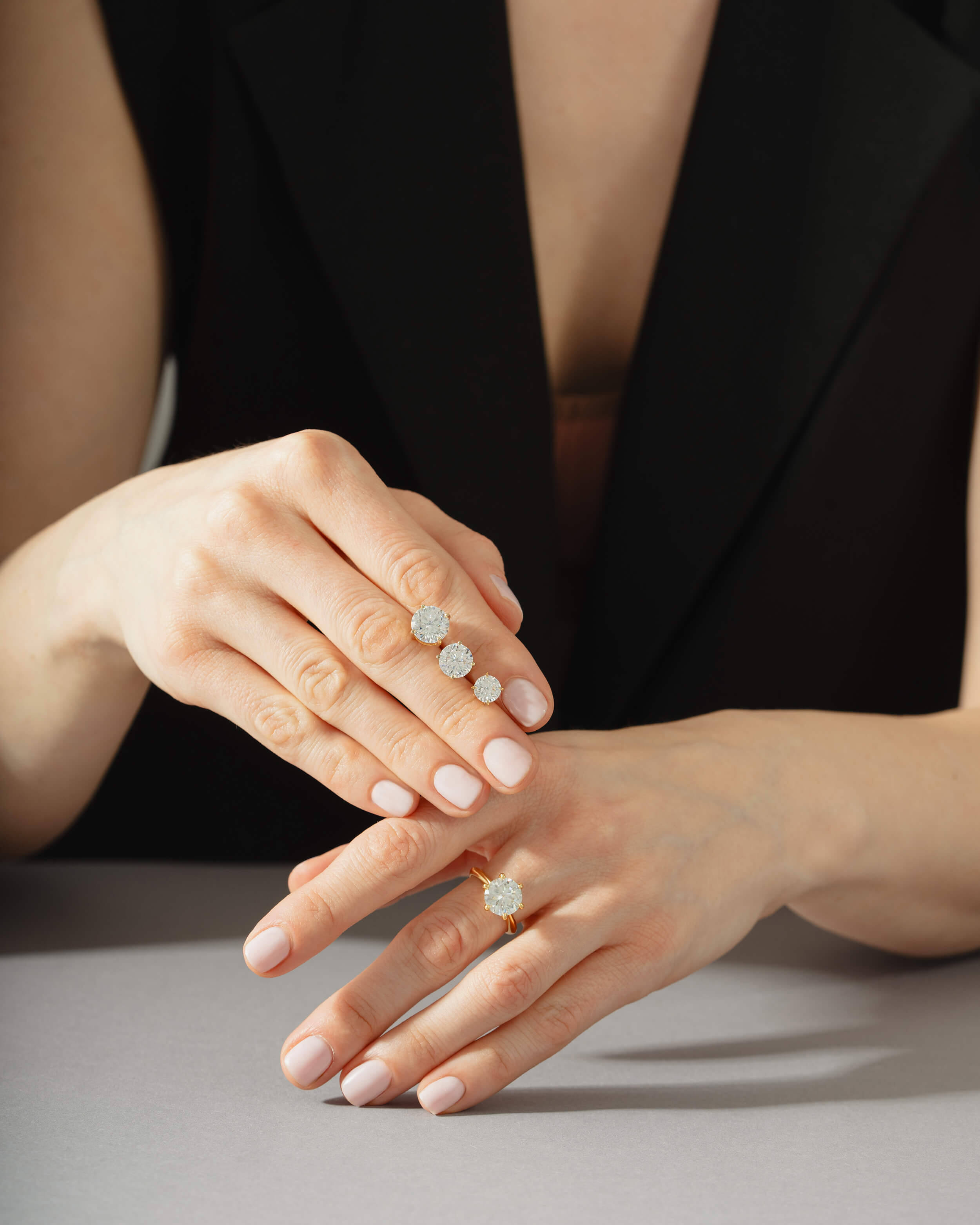
Including the product next to a hand, on a model, inside a familiar environment or alongside another recognisable object gives customers an immediate point of reference.

This is not only lifestyle photography.

It is visual information.

Baymard’s usability research found that many shoppers actively try to determine product size from imagery, and struggle when product pages do not provide an image that communicates scale.

A hand, body or familiar object can communicate scale faster than dimensions alone.
Editorial jewelry photography — two hands wearing silver and gold rings against gray table, black blazer minimal styling
Scale can be communicated in different ways, but the principle is the same: give the viewer something familiar to compare the product with.

Let Customers See the Details They Would Inspect in Person

When someone picks up a product in a store, they naturally move closer.

They inspect the material.

They look at the finish.

They check the label, closure, texture, edges and small details.

E-commerce photography should give them the digital equivalent.

For  skincare, that might mean showing the viscosity of a serum, the finish of an oil or the texture of a cream closely enough that the customer can almost anticipate how it will feel.

For jewelry, it could be the stone setting, surface finish or scale of a piece against the skin.

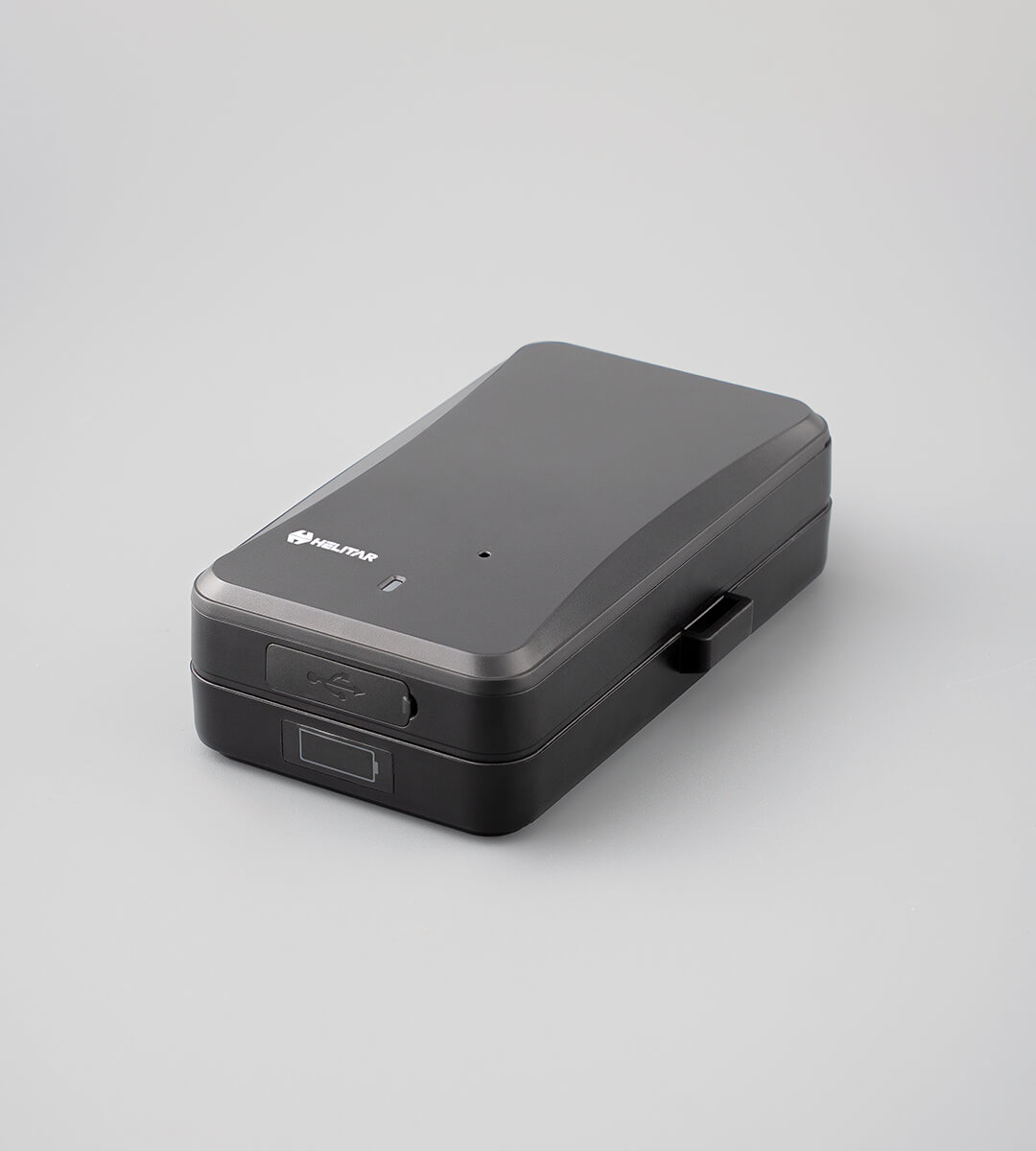
For a technology product, it might be the ports, buttons, materials, display or installation details.

High-resolution detail photography and useful close-ups help the customer understand what they are actually buying rather than relying on assumptions.

When images cannot be inspected properly, shoppers can struggle to evaluate the product at all. Baymard has found that insufficient image resolution and zoom can directly interfere with product evaluation.

Lifestyle Photography Should Explain Something

Lifestyle imagery is often treated mainly as branding content. It can do much more.

The strongest lifestyle images communicate information while creating desire. A skincare bottle photographed in someone’s hand immediately gives a sense of size.

A piece of jewelry worn on a model shows proportion and how it interacts with the body.

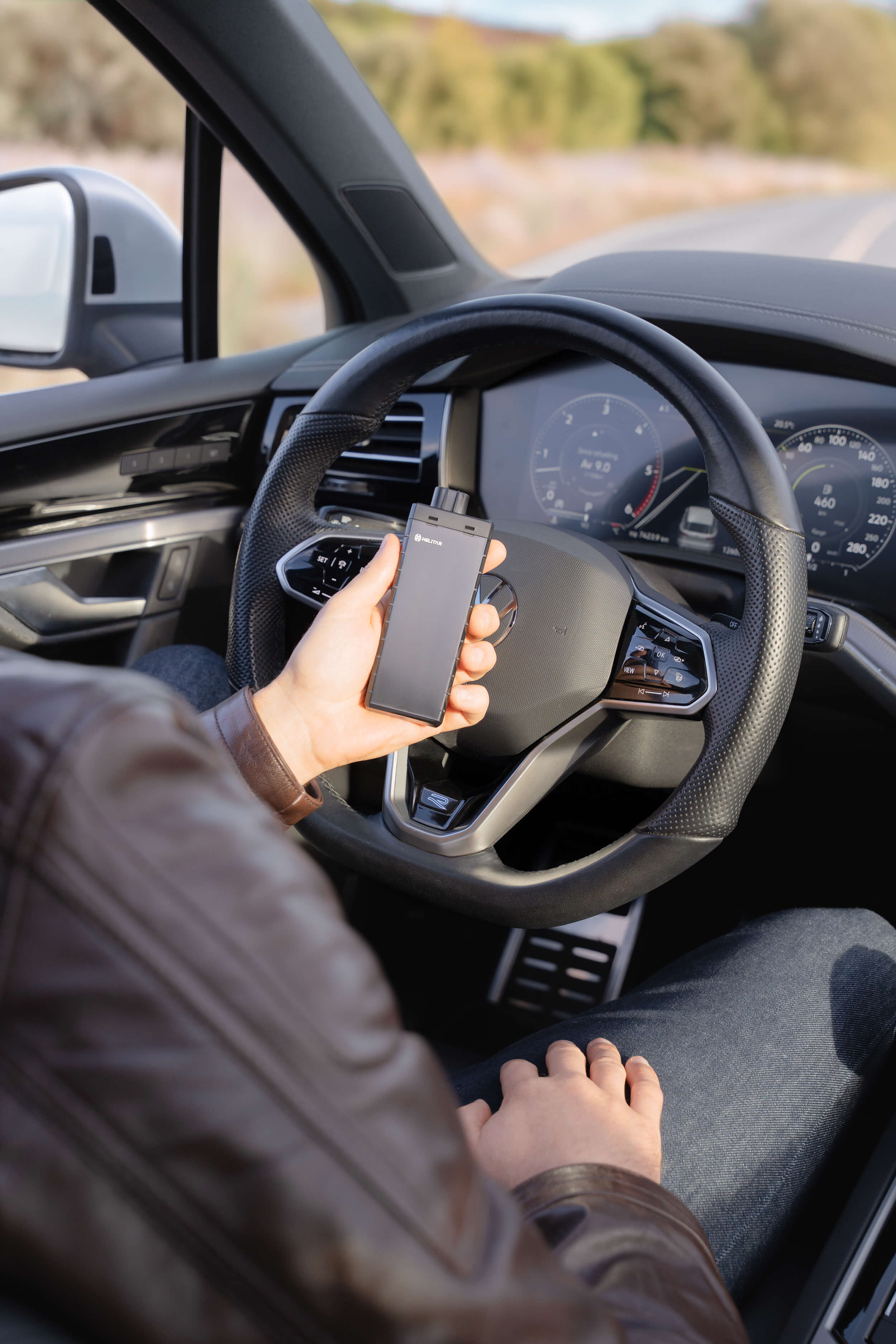
A device photographed inside the environment where it is actually used explains its purpose more quickly than a paragraph of technical copy.

When I plan a commercial image, one of the questions I keep coming back to is not simply:

Does this look good?

but:

What does this image help the customer understand?

The strongest images often do both. They create desire while quietly answering a question.

Context can explain function before the customer reads a specification.

Different Images Solve Different Types of Uncertainty

There is rarely one perfect product image.

Customers need different views because each one answers a different question.

I find it more useful to think about a product gallery as a set of jobs rather than a set number of photographs.

  • One image establishes the product.
  • Another explains scale.
  • Another reveals material or texture.
  • Another puts it into context.
  • Another creates desire.

For many e-commerce brands, a useful visual system can include:

Clean product images
to show exactly what is being purchased.

Multiple angles
to create a more complete understanding of the product.

Macro and detail images
to communicate quality, texture and materials.

Scale or on-model imagery
to establish proportion.

Lifestyle photography
to show context and use.

Ingredient or texture imagery
to make beauty and wellness products feel more tangible.

Feature-focused images
to explain functional details, particularly for technical products.

A useful question is therefore not “How many images do we need?” but “What does the customer still not understand?”

The goal is not to create more images simply for the sake of having more content.

It is to make sure the important customer questions have a visual answer.

gps-device-automotive-product-photography

The same product can need very different images: one to establish it clearly, one to show scale and one to explain how it fits into real life.

Consistency Also Reduces Friction

Buying friction is not always caused by missing information.

Sometimes it comes from inconsistency.

If every product is photographed at a different scale, from a different angle or under noticeably different lighting, comparing products becomes harder.

This is particularly important for e-commerce collections.

Consistent framing, lighting, colour and scale make browsing easier and allow customers to focus on the differences between the products themselves rather than differences in how they were photographed.

Good photography therefore works not only image by image, but as a system across the entire product range.


Product Photography Should Be Planned Around the Customer Journey

A photoshoot is often planned around a list:

hero image,
three product shots,
two lifestyle images,
one detail.

A better starting point can be the customer’s questions.

What might someone hesitate about before purchasing this product?

What cannot be understood from the product description alone?

What would they naturally inspect if the product were in front of them?

What needs to feel credible?

What needs to feel desirable?

Once those questions are clear, the shot list becomes much more strategic.

The result is not simply a collection of beautiful images.

It is a visual system designed to help customers move from curiosity to understanding, and from understanding to confidence.

Beautiful Images Still Matter — But Clarity Comes First

Not every commercial image needs to explain a feature. Some have a different job: to create desire, establish the visual world of the brand and make the product feel distinctive before the customer has read a single line of copy.

But aesthetics work best when they are built on clarity.

A visually striking campaign cannot fully compensate for a product page that still leaves fundamental questions unanswered.

The strongest e-commerce photography does both: it makes the product desirable and gives the customer enough visual information to choose it with confidence.

That is when photography stops being decoration and becomes part of the buying experience.

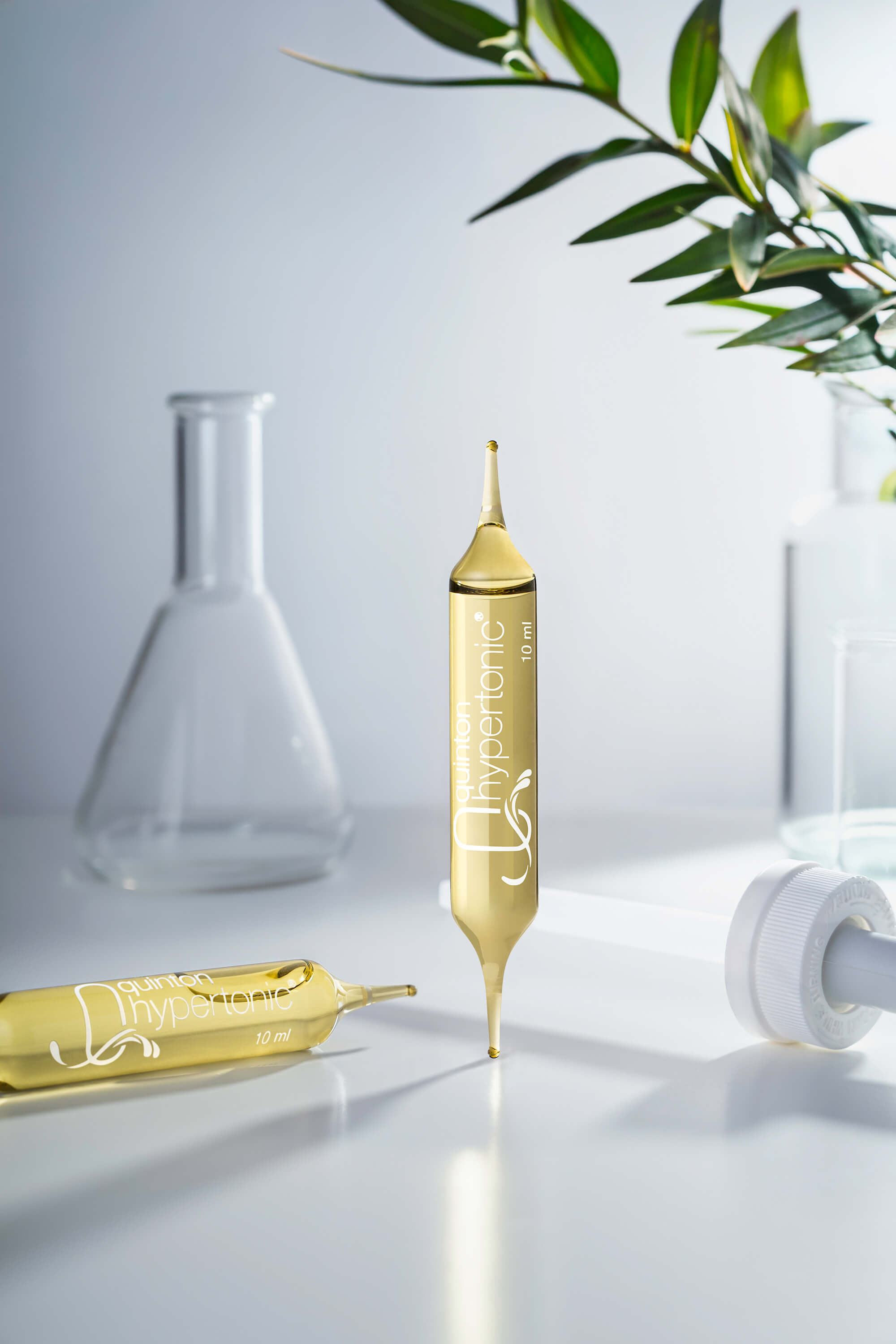
Premium Supplement Campaign

Planning Product Photography for Your Brand?

I create commercial product photography for beauty, wellness, jewelry and tech brands, combining clean product imagery, lifestyle photography, detailed close-ups and creative direction into a cohesive visual system.

Projects can be managed remotely, with products shipped directly to my studio in Romania.

Explore my product photography services or get in touch to discuss your next shoot.

This website uses cookies to improve your experience. Cookie Policy